

Solar-Plus-Storage
Traditional solar power only generates electricity "when the sun is out." Solar-plus-storage "packages and stores" that sunlight for use whenever needed, transforming green power from an "intermittent, variable energy source" into "dispatchable, predictable, stable power."
- Store green power by day: solar power is partly fed into the grid or used on-site, with the surplus stored in the site's batteries.
- Precisely discharge in the evening: during the 4pm–10pm evening peak, batteries discharge back to the grid to fill the demand gap.
- Earn policy incentives: winning Ministry of Economic Affairs tenders lets Taipower purchase evening-discharged green power at a premium "capacity rate."
- Core value: converts daytime "variable green power" into nighttime "high-value, stable, dispatchable power."
Who It's For & Applicable Sites
Solar-plus-storage has extremely wide applicability — from national-scale ground-mounted sites to corporate factories and even residential communities:
- Grid side (large sites): deploying megawatt (MW)-scale storage containers smooths generation fluctuations and helps Taipower flatten the "evening peak" duck curve.
- Customer side (factories): suited to large power users and RE100 companies, maximizing self-generation and self-consumption by using stored green power for nighttime production lines.
- Microgrids (offshore islands and remote areas): serves as an independent disaster-resilience power source, switching automatically during power outages to maintain basic electricity resilience.
- New commercial applications (office and residential communities): integrates "solar + storage + charging" (PV, storage, and EV chargers), storing power by day and charging EVs at night, easing pressure on building contracted capacity.
Benefits & Advantages
- Economic and investment advantages:
- Doubled electricity sale revenue: winning government tenders unlocks a "second revenue stream" from high-value evening wholesale power.
- Peak shaving to cut electricity costs: discharging for self-use during peak pricing periods lowers corporate electricity costs and avoids contract-overage penalties.
- Time-shifting to unlock feeder capacity: storing power during the day avoids feeder congestion, then discharging at night when capacity is free — turning daytime "variable green power" into the "stable power" most needed at night, effectively doubling the site's value.
- Island-mode operation prevents outages: functions as an uninterruptible power system (UPS), keeping production lines running during a grid-wide power failure.
Virtual Power Plant
A Virtual Power Plant (VPP) is not an actual power plant — it uses cloud platforms and AI technology to integrate energy resources scattered across many locations, such as rooftop solar, wind power, battery storage, and, increasingly, electric vehicles or charging/swapping stations, into a network of "distributed energy resources (DERs)." Through an aggregator, these distributed resources are "aggregated" into an invisible power plant that the grid can dispatch in real time.
Advantages of Virtual Power Plants
- Strengthens grid resilience, preventing large-scale blackouts: a failure at a traditional power plant can easily trigger a major blackout. Because VPP resources are distributed, even if some equipment fails, other nodes can keep supplying power, avoiding single points of failure.
- Participates in the electricity market to create extra revenue: through demand response, businesses can reduce consumption or release stored power during peak demand, turning what would have been an "electricity expense" into "additional revenue."
- Saves on deployment costs: VPPs make direct use of existing distributed equipment, saving on space and development costs.
Front-of-the-Meter & Behind-the-Meter Storage Systems
Front-of-the-Meter (FTM) storage sits on the grid side, led by utilities to stabilize the grid and regulate renewable energy. Behind-the-Meter (BTM) storage sits on the customer side, installed inside homes or factories to store and dispatch off-peak and peak electricity, and can also serve as emergency backup power.
Who It's For (Applicable Sites)
- FTM storage sits on the grid side, focused on power stability; BTM storage sits on the customer side, focused on saving electricity costs and providing emergency backup.
Advantages of FTM & BTM Storage
Front-of-the-Meter (FTM) storage:
- Stabilizes grid frequency: responds quickly to regulate grid fluctuations, preventing outages and supply-demand imbalances.
- Regulates renewable energy: addresses the intermittency of wind and solar power by storing surplus electricity to avoid waste.
Behind-the-Meter (BTM) storage:
- Stores cheap electricity during off-peak pricing and discharges it during peak periods, reducing high variable electricity costs. Commercial and industrial users can also flatten peak demand to lower contracted capacity and avoid overage penalties.
Regional Microgrid
A microgrid is a small-scale, localized power system made up of distributed energy resources (such as solar and wind), energy storage systems (ESS), and loads (power consumers). It can operate connected to the traditional grid, or disconnect during emergencies to run independently in "island mode."
Who It's For (Applicable Sites & Fields)
Microgrid technology adapts to the electricity usage characteristics of different sites, providing customized energy dispatch:
- Remote areas, offshore islands, and special isolated sites
- Disaster-resilience and critical infrastructure
Advantages of Regional Microgrids
- Improved resilience: if the external grid fails, the microgrid can disconnect within milliseconds and rely on its own storage and generation assets to keep the local area running.
- Environmental benefits: on-site storage smooths renewable energy fluctuations, increases green power utilization, and helps businesses meet ESG and RE100 requirements.
- Economical power dispatch: charges when electricity is cheap (or green power is in surplus) and discharges during peak pricing (peak shaving), while also avoiding contract-overage penalties and lowering base electricity charges.
Case Studies
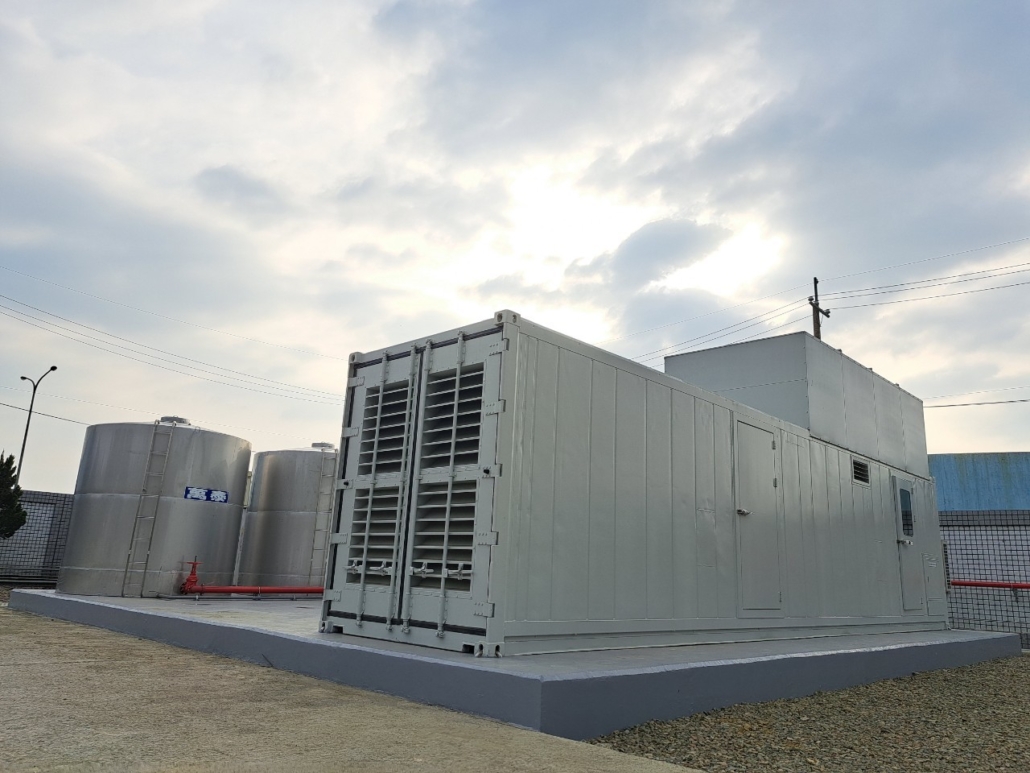
EMS
An energy management system for real-time monitoring and energy-use optimization.
Advantages
- Supports data analysis and system integration.
- Improves overall energy operation efficiency.
Contact Window
- Department
- Public Relations Department
- Contact
- Teresa Chen
- Phone
- (07) 334-7879#3515
- sales@acmepointes.com