

Rooftop / Factory Roof-Mounted
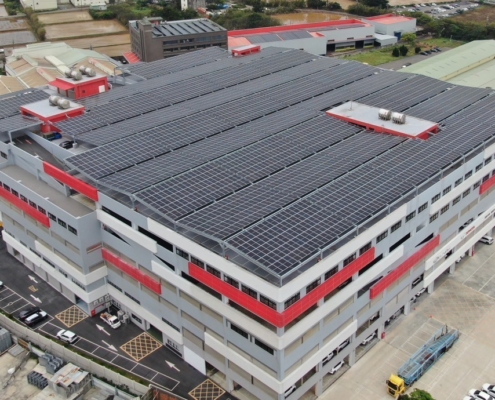
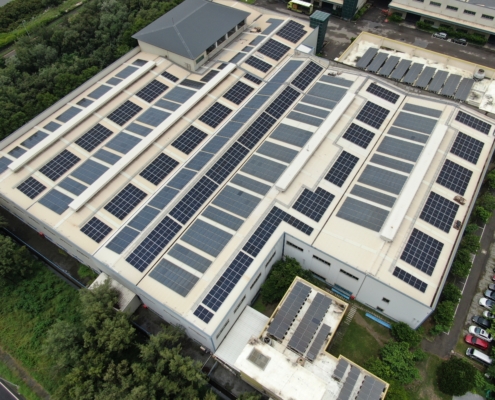
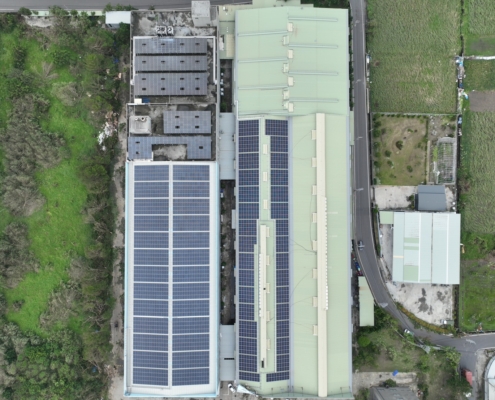
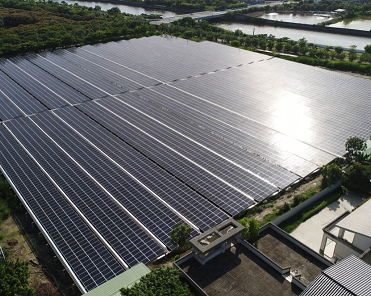
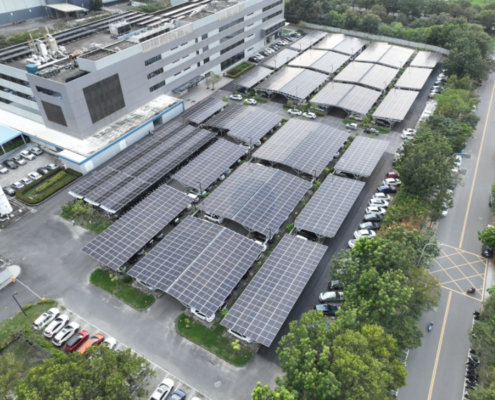
Rooftop solar involves installing solar power systems on the roofs of residences, schools, and factories, including structures such as poultry houses and livestock farm canopies.
Applicable Sites
- Corporate building and factory rooftops.
- Government agency and school rooftops.
- Agricultural greenhouse rooftops.
- Canopy roofs built for livestock farming.
Advantages of Rooftop Systems
- Cooling and energy savings: effectively lowers indoor temperature by 3–5°C, reducing air-conditioning electricity costs.
- Monetizing idle space: makes effective use of unused rooftop space to generate stable passive income.
- Carbon reduction: lowers carbon emissions and enhances the green image of businesses and government agencies.
- Prevents leaks while protecting and extending the lifespan of the building roof.
Case Studies
Floating (Buoyant)
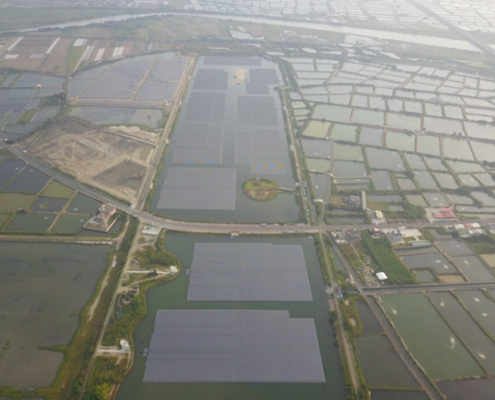
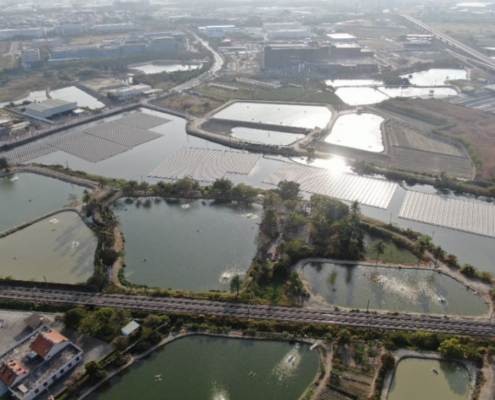
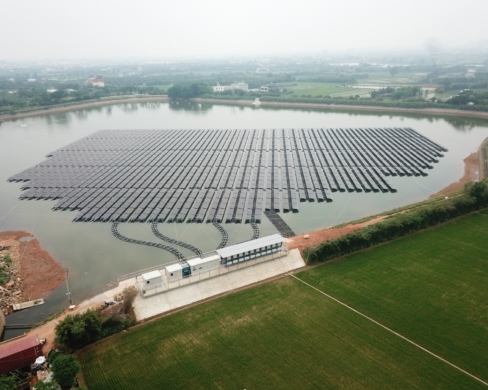
Floating solar involves installing solar power systems on large reservoirs, detention ponds, and irrigation ponds, and can also be deployed on salt fields and aquaculture ponds. ACMEPOINT Energy Services is the first company to develop floating solar using purely Taiwanese technology, and has successfully completed grid connection and power generation on multiple projects.
Applicable Sites
- Public detention ponds, reservoirs, and irrigation ponds.
- Private aquaculture fish ponds.
Advantages
- High generation efficiency: produces approximately 18–19% more power than ground-mounted systems.
- Slows algae growth (inhibits eutrophication): blocking direct sunlight reduces algae growth in the water, effectively slowing reservoir eutrophication.
- Slows water evaporation: large-area coverage reduces the rate of water evaporation, helping protect water resources and improve water use efficiency.
- Increased water resource utilization: helps generate additional value from various water resources.
Case Studies
Ground-Mounted
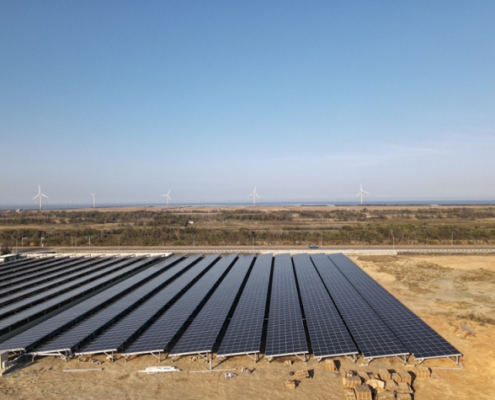
Ground-mounted solar involves installing solar power systems on land, either directly or on elevated racking. It is commonly used on land unsuitable for farming, or land affected by subsidence or contamination, allowing it to rest and be repurposed over the long term.
Applicable Sites
- Land unsuitable for farming and land affected by subsidence.
- Land requiring rest, such as land affected by contamination or soil salinization.
- Coastal land with strong winds and high salinity.
Advantages
- Land reuse: gives previously unusable land renewed value.
- More usage options: short- to medium-term utilization planning for idle public assets, diversifying land use.
- Economic value: generated electricity can be sold to Taipower, providing a stable source of economic benefit.
Case Studies
Fishery-Solar Symbiosis
"Fish-solar symbiosis" is a core Taiwanese policy that combines green energy (solar PV) with traditional aquaculture, emphasizing "aquaculture first, green energy second." Solar panels are installed over fish ponds while existing aquaculture production is maintained.
Applicable Sites
- Piles are driven into existing open-air fish ponds (such as clam ponds or milkfish ponds) to elevate solar panels to a height of 2.5–4 meters or more.
Advantages
- Natural protection: lowers water temperature by 2–3°C in summer, preventing heat stress in aquatic life or algae die-off; in winter, it blocks some cold wind, reducing the risk of cold-related die-off.
- Dual-income protection for landowners and fish farmers: the land (fish ponds) is no longer limited to aquaculture income alone — landowners or fish farmers receive long-term, stable land rent (typically over a 20-year lease), combined with existing aquaculture income, forming a reliable financial safety net.
- Sustainable land use and green energy targets:
- Multi-use land (composite utilization): does not compete with agriculture for land or damage forest cover.
- Carbon reduction benefits: large-scale solar farms provide Taiwanese businesses with urgently needed RE100 green power certificates, helping local industries meet international carbon reduction requirements.
- Economic value: generated electricity can be sold to Taipower, providing a stable source of economic benefit.
Contact Window
- Department
- Public Relations Department
- Contact
- Teresa Chen
- Phone
- (07) 334-7879#3515
- sales@acmepointes.com